P-Sorb™ is a virgin activated carbon (AC) produced from a rare coal utilizing a high temperature activation process under stringent quality control, and is uniquely suited for sorption of PFAS achieving 100% or higher sorption capacity than other activated carbon options on a comparative isotherm basis. Activated carbon is an approved method for treating PFAS (ITRC 2023).
P-Sorb™ effectiveness comes from its pore structure. It carries a high proportion of mesopore volume, well matched to the molecular size of PFAS compounds, which improves both adsorption capacity and resistance to foulin, an advantage that holds across product forms, whether colloidal-scale, powdered, or granular. Pore-size distribution is a primary driver of PFAS performance, and it’s where P-Sorb is differentiated. Its lower apparent density also distributes more carbon volume and particle surface per pound, which can improve coverage or lower applied cost in volumetric applications.
CERES brings this technology to the market for soil and groundwater remediation as a standalone solution for PFAS or in combination with other sequestration and reduction reagents including MTS®, organoclay, ZVI, Bacteria, TEAs or Donors to degrade or reduce many other contaminants of concern including heavy metals, chlorinated solvents, petroleum hydrocarbons, PAHs or other VOCs and SVOCs.
Would you like a quote for your project or a sample of one of our zero valent iron products? We can help –

Physical Properties
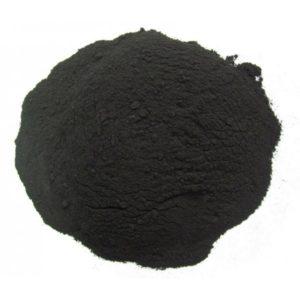
Powder Form: D50: 15 µ, >90% less than 44 µ
Granular Form: 300 µ- 2,000µ depending on selected grade
Solubility in Water: Not soluble
Color: black
99% Purity
Fine Powder to coarse grain size available
Highly reactive
Density: 0.40 g/cm3
Surface area: 950- 1,000 m2/g
P-Sorb™ is a non-corrosive and non-toxic powder and granular activated carbon that can be very effective in low permeability formations and injected into silts and clays (Winner and Fox, 2016) or combined with sand to improve hydraulic conductivity and preferential pathways for more rapid diffusion and effective capture of PFAS compounds.
How does P-Sorb improve remediation performance in mixed COC applications?
Introducing adsorptive media, like P-Sorb™, to the treatment zone improves sequestration of PFAS compounds over time to reduce mass flux and when combined with biotic or abiotic reagents can facilitate the formation of active biofilm and enhanced biodegradation processes (Voice et al, 1992), abiotic reduction of competing VOCs, thereby improving long term performance of PFAS sequestration. The combined effects often result in synergistic processes
that significantly prolonging the remediation lifetime to achieve increased value and/or exceed remedial objectives. The coupling of adsorption and degradation reduces the potential for contaminant rollover effects or competing contaminant rebound that is frequently observed with conventional remediation technologies.
How does PSorb reduce diffusive mass flux and potentially reduce overall time of remediation at mixed COC and PFAS sites?
The addition of P-Sorb™ into the target treatment zone of the aquifer, results in rapid adsorption/sequestration of PFAS and other organic compounds. This is revealed in reduced dissolved phase concentrations in the aquifer, verified by reducing trends in groundwater monitoring wells. By drawing down the dissolved-phase concentration, P-Sorb™ steepens the concentration gradient and accelerates back-diffusion of contaminants held in the adsorbed phase and low-permeability matrix into the mobile porewater, where they in turn are captured. Lowering these elevated soluble-phase concentrations can also shorten the lag time for biodegradation of co-occurring biodegradable organics (Aktas et al., 2012). Pairing P-Sorb™ with complementary biotic or abiotic processes is therefore essential to destroy biodegradable COCs over time and to reduce long-term competition for adsorption sites.
P-Sorb™ PAC and GAC is ready to inject at low pressure and for permeability enhancement applications. It is commonly employed to support barrier applications to reduce or eliminate off-site transport of VOCs, to stabilize hot spots not otherwise economically addressed by other methods, and to complement plume remediation strategies. Yes, it can also be used for PFAS sites. P-Sorb™is non-corrosive to underground structures or piping systems and non-toxic.
P-Sorb™ GAC is effective in low permeability formations when injected into silts and clays (Winner and Fox, 2016) or combined with sand proppant to improve hydraulic conductivity and preferential pathways to increase diffusive mass flux and effective capture of VOCs.
When working with CERES, you are not just getting something to inject, you are getting a product we engineered for your specific site! We modify our products to your site so you are getting more attention and a tailored solution that will do more than achieve chemical reaction, we are talking about a change in the fate and transport processes by both hydrogeologic, geochemical and redox reactions.